



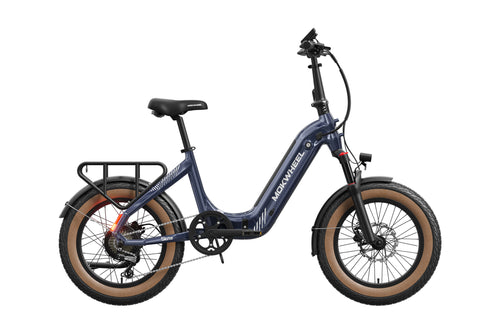


A faster E-Bike can sound appealing at first. Getting to work sooner, handling longer routes with less effort and having more support available all feel like clear advantages. But in everyday riding, the highest possible speed is rarely the only thing that matters.
Most riders do not spend their time on long, empty roads. They ride through traffic, stop at junctions, use cycle paths, carry bags, plan weekend routes or head out for camping, fishing or relaxed rides outside the city. In these situations, comfort, control and reliability often matter more than top speed.
That is why the better question is not simply how fast an E-Bike can go. It is whether that speed fits the way you actually ride. For many people, a standard 25 km/h Pedelec offers the most practical balance. For others, an S-Pedelec or faster model may sound interesting, but it also brings more responsibility and more rules.

Why Do Some Riders Look for an E-Bike 50 km/h
The search for an E-Bike 50 km/h usually comes from practical expectations. Some riders want a shorter commute. Others want more confidence against headwind, on hills or over longer distances. A faster model can seem like the easiest way to make every ride feel lighter.
There is also a simple psychological reason: more speed often feels like more freedom. A stronger E-Bike sounds as if it should offer more control, more range and more flexibility. In real use, however, speed alone does not solve every problem.
As speed increases, the ride also asks more from the rider. Braking distance, reaction time, road conditions and traffic awareness all become more important. A route that feels calm at 25 km/h may feel much more demanding at 45 km/h or around 50 km/h.
For leisure riding, the difference is even clearer. A trip to the lake, a relaxed weekend route, a family ride or a ride with camping gear does not usually depend on reaching 50 km/h. What matters more is smooth assistance, predictable handling, reliable brakes and enough range to enjoy the journey without stress.
Pedelec, S-Pedelec and Faster E-Bikes: What Is the Difference
In everyday language, many people call everything an E-Bike. In practice, speed and assistance type can place bikes into different categories.
A standard Pedelec, also known as an EPAC, assists while you pedal and usually cuts assistance at 25 km/h. In the European EPAC framework, the motor has a maximum continuous rated power of 0.25 kW, and assistance must reduce and stop at 25 km/h or earlier when the rider stops pedalling. This is also reflected in EN 15194 for EPAC bicycles.
An S-Pedelec offers faster pedal assistance, often up to 45 km/h. Because of that speed, it is commonly treated closer to a moped or L-category vehicle in many European countries. EU vehicle type-approval rules also separate standard pedal-assist bicycles from vehicles that fall into motor vehicle categories.
An E-Bike around 50 km/h or above sits in a more specialised area. It should be checked carefully before use, because the legal position depends on vehicle type, approval, speed, power and local road rules.
| Category | Assisted Speed | Typical Use | Everyday Practicality |
| Pedelec / Standard EPAC | Up to 25 km/h | Daily rides, city routes, leisure trips | Simple and flexible |
| S-Pedelec | Up to around 45 km/h | Longer commuting routes | Faster, but more regulated |
| Faster E-Bike | Around 50 km/h or more | Special use cases | Usually less practical for normal daily riding |
These categories matter because the rules can change with speed. Licence, insurance, helmet requirements, registration and access to cycle paths may differ depending on the country and vehicle class.

Which E-Bike Speed Fits Your Riding Style
The right speed depends on your routine. A rider who commutes on the same long road every day has different needs from someone who rides to shops, through parks, along rivers or on weekend routes.
Road surface also matters. Smooth asphalt, city traffic, gravel paths, forest tracks and country roads all create different demands. A higher top speed is useful only when the route, traffic and riding skill make that speed realistic and safe.
25 km/h: Practical for Daily Riding, Leisure and Touring
A 25 km/h Pedelec suits riders who want simple use, predictable handling and a relaxed riding experience. It works well for city streets, cycle paths, short daily routes, longer leisure rides and family outings.
Its value is not only in the speed limit. A good 25 km/h E-Bike helps where support is most useful: starting from a stop, climbing small hills, riding into wind or covering longer distances without feeling exhausted. The ride remains calm, controlled and close to a familiar bicycle feeling.
For most everyday situations, this speed is enough. In urban areas, riders often stop frequently or share space with traffic, pedestrians and other cyclists. A smooth, comfortable E-Bike 25 km/h can feel more useful than a faster model that demands more attention on every ride.
45 km/h: Better for Planned Commuting Routes
An S-Pedelec with support up to around 45 km/h can make sense for riders with longer, regular commutes. It is more suited to predictable routes, suitable roads and riders who are comfortable with higher speeds.
This category is less about spontaneous leisure riding and more about planned mobility. If the daily route is clear and mostly road-based, faster assistance may save time. But it also asks for more awareness, stronger braking control and a better understanding of local requirements.
For relaxed tours, family rides, frequent stops or mixed cycle paths, an S-Pedelec is not always the easiest option. The extra speed can bring extra complexity.
50 km/h: More of a Special Use Case
An E-Bike 50 km/h can sound impressive, but it is not automatically the best choice for normal riding. Speeds around 50 km/h require suitable roads, strong control, good braking technique and a clear legal classification.
On narrow routes, wet roads, gravel, busy city streets or shared paths, high speed can quickly feel less comfortable. The ride may become more demanding rather than easier.
For riders who want an E-Bike for daily errands, touring, family rides, camping or fishing trips, 50 km/h is usually not the most practical priority. Stability, range, braking confidence and comfort often matter more than the highest number on the display.

Why a 25 km/h E-Bike Is Often the More Sensible Choice
A 25 km/h E-Bike is not a compromise for riders who cannot choose something faster. For many people, it is simply the better fit.
Daily riding rarely happens on long, empty roads. It includes traffic lights, junctions, other riders, turns, small climbs, headwind and changing surfaces. In those situations, a bike that is easy to control can be more valuable than one with a high top speed.
A standard Pedelec also keeps the ride closer to normal cycling. It gives support when needed but does not make the ride feel rushed. That balance is one reason why standard EPACs remain central to everyday E-Bikes in Europe.
Range, comfort and handling also influence the real riding experience. A bike with a comfortable position, reliable tyres, good brakes and stable support can make longer routes more enjoyable than a faster model that requires more focus and effort.
How a 25 km/h E-Bike Fits Different Routes
Not every rider uses an E-Bike in the same way. That is why the right choice depends more on the route than on speed alone.
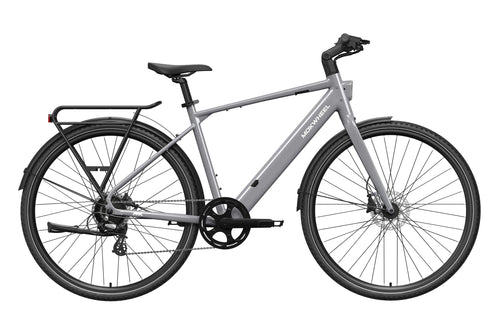
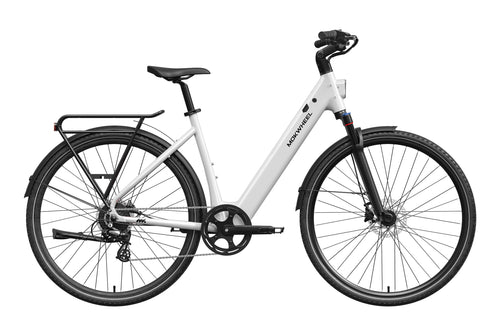
For city riding, smooth handling and simple control are important. An Electric city bike is designed for everyday routes such as commuting, shopping, short errands or flexible rides through town. FLINT PRO fits this kind of use well when a rider wants a modern, controlled E-Bike for regular urban riding.
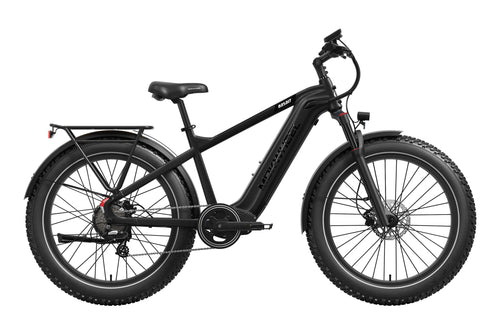
For longer outdoor routes, the priorities change. Range, comfort and stability become more important than pure speed. Riders heading toward campsites, lakeside areas, country roads or weekend routes often benefit from a bike that remains steady on changing surfaces. Basalt 2.0 is more suitable for riders who want one bike for longer rides, outdoor plans, camping or fishing trips.
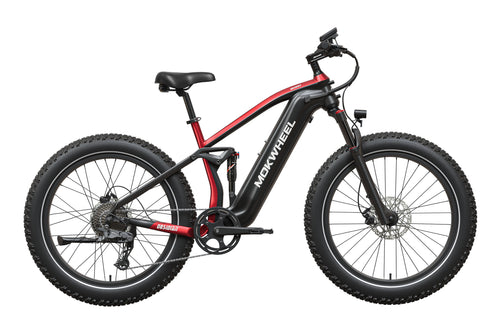
Comfort can also become more important after several kilometres. A relaxed riding position, steady assistance and predictable control help longer rides feel easier. Obsidian ST 2.0 can make sense for riders who value comfort, control and easier access on more varied routes.
In the end, the right E-Bike is the one that fits your real riding habits. The best speed is not always the highest speed. It is the speed that makes your regular routes feel easier, safer and more enjoyable.

FAQ
Q1: Is 25 km/h slow for an E-Bike?
For many daily rides, 25 km/h is not slow. In cities, on cycle paths and on mixed routes, riders rarely maintain higher speeds for long. Smooth support when starting, climbing or riding into wind often matters more than riding faster.
Q2: Can E-Bikes go faster than 25 km/h?
Standard Pedelecs usually assist up to 25 km/h. Faster assistance is usually linked to S-Pedelecs, often up to around 45 km/h, which may involve additional rules such as insurance, registration or licence requirements depending on the country.
Q3: Who should consider an S-Pedelec?
An S-Pedelec can suit experienced riders with longer, fixed commuting routes on suitable roads. It is usually less convenient for relaxed leisure rides, frequent stops, family outings or routes that mainly use shared cycle paths.
Q4: What happens if an E-Bike is tuned?
Tuning can change how a standard Pedelec is classified. Removing speed limits or changing motor behaviour may affect legality, insurance, warranty and safe road use. It can also create serious problems if an accident occurs.
Q5: Which E-Bike speed is better for touring, camping or fishing?
For touring, camping or fishing, a stable 25 km/h Pedelec is often more useful than a very fast model. Range, comfort, brakes, tyres and load handling usually matter more than maximum speed.
Q6: Is a faster E-Bike harder to ride in daily life?
In many situations, yes. Higher speed requires stronger attention, better braking control and more riding experience. For relaxed daily routes, a well-balanced 25 km/h E-Bike is often easier and more comfortable.
Conclusion: The Right E-Bike Does Not Have to Be the Fastest
An E-Bike with 50 km/h support can attract attention. For certain riders and specific roads, more speed may have a place. But for many people who ride in daily life, on leisure routes or on longer weekend trips, a 25 km/h Pedelec is often the more practical choice.
It is easier to control, works well across many everyday routes and places the focus on comfort, range and reliability. That fits the way most people actually ride.
The best E-Bike is not the one with the highest top speed. It is the one that makes your usual routes feel better. For many riders, that means smooth support, stable handling and a comfortable pace that fits real everyday life.
Read More: E-Bike Laws in Europe 2026: Rules, Safety Standards and What Riders Need to Know


