





Every year on 3 June, World Bicycle Day highlights the bicycle as a simple, clean and sustainable form of mobility. As World Bicycle Day 2026 approaches, the conversation is no longer only about environmental awareness. It is also about how cycling can fit more naturally into everyday life.
For many riders across Europe, mobility needs to be more than theoretically sustainable. It has to work for commuting, shopping, short errands, family plans and relaxed weekend rides. It should feel reliable, healthy and comfortable without adding unnecessary stress to the day.
This is why relaxed everyday mobility is becoming more important. Cycling should not always feel like a sporting challenge. It should be a practical part of daily life, combining movement, efficiency and comfort in a way that feels easy to repeat.

Why Cycling in Everyday Life Is Not Always Easy
A traditional bicycle still has many strengths. It is quiet, flexible, direct and brings natural movement into the day. At first glance, it can seem like the perfect answer to many everyday mobility needs.
In real life, however, cycling is not always as easy as it looks on a map. A commute may be longer than expected. A route may include several climbs. The wind may feel stronger than planned. Add shopping bags, work items or a busy schedule, and the choice to ride can quickly feel less simple.
This does not make the bicycle less valuable. It simply shows that daily mobility has different demands from a relaxed weekend ride.
Many people today are also more aware of their energy, comfort and time. They are not necessarily looking for a harder workout. They want a way to move that feels good often enough to become part of their routine. This is where the gap between wanting to cycle more and actually doing it regularly often appears.
Why E-Bikes Make Everyday Cycling Noticeably Easier
An E-Bike does not change the basic idea of cycling. Riders still pedal, stay active and experience the route more directly than they would in a car. The difference lies in the support while pedalling.
That extra support can make everyday rides feel more predictable, more comfortable and more realistic. For many riders, it lowers the barrier to choosing the bike more often.
Less Effort in Daily Use
In everyday life, it is rarely about one single ride. It is about the total effort of many small journeys: commuting in the morning, stopping for shopping later, riding across town or planning a longer route at the weekend.
An E-Bike can make these journeys easier to start. Longer distances, small climbs and repeated stops become less discouraging. What might feel tiring on a traditional bicycle can remain manageable with electric assistance.
This is what makes E-Bikes so relevant for daily mobility. They do not reduce the value of cycling. They reduce the hesitation that often stops people from choosing the bike in the first place.
More Comfort in Everyday Mobility
Comfort is not a minor detail. In daily use, it often decides whether a mobility choice becomes a habit or remains only an occasional idea.
An E-Bike offers a riding experience that stays active but feels smoother and more balanced. This can be especially helpful on repeated routes, where small improvements in comfort make a noticeable difference over time.
Many riders appreciate this balance: being outdoors, moving more and using the bike for everyday routes without needing to plan extra effort into every journey. In this sense, an E-Bike is not a replacement for cycling. It is a way to make cycling easier to integrate into everyday life.
Simple Care and Easy Everyday Use
People who are new to E-Bikes sometimes expect them to be complicated. In practice, everyday care is usually easier than expected.
Charging the battery, keeping the bike clean and checking key components can become part of a normal routine. Brakes, tyres, chain and general safety checks are already part of regular bicycle use. The battery simply adds one more habit.
For many riders, an E-Bike does not feel like a difficult technical device. It feels like a practical extension of familiar cycling, with extra support when it is needed.

How to Find the Right E-Bike for Everyday Life and Longer Rides
The right E-Bike depends on how and where it will be used. A model for daily city rides and commuting does not need to meet the same demands as one for longer tours, mixed terrain or travel.
Instead of looking only at specifications, it is better to start with real use: comfort, range, handling, storage, riding position and the type of routes that are part of daily life.
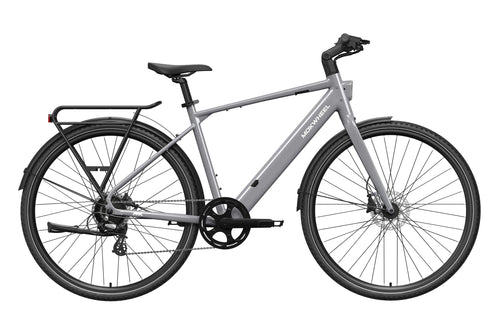
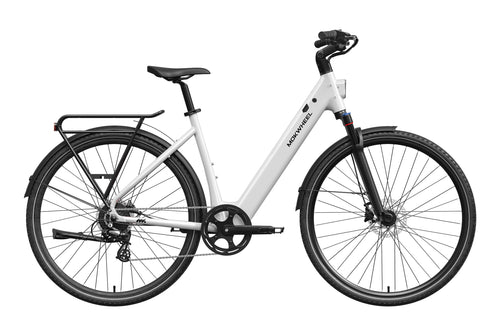
For riders who mainly want a dependable option for city routes, commuting and short everyday journeys, an easy-to-handle model with a calm ride feel is often the best fit. In this case, Asphalt can be a suitable choice. It is designed for daily commuting, urban riding and a smooth pedalling experience.
If a lighter ride feel, agility and simple handling are more important, a slimmer model may be more suitable. This fits riders who often move through town, need to manage the bike regularly or prefer a modern and direct solution for everyday routes. Flint Pro works well in this direction, offering a lighter and more straightforward choice for regular daily rides.
When everyday use and leisure riding begin to overlap, the requirements change. Riders who plan longer weekend trips, want more range for travel or prefer comfort over several hours may want to look toward a trekking-style option. Scoria 3.0 can be a good fit here, combining compact design with strong support for longer and more comfortable rides.
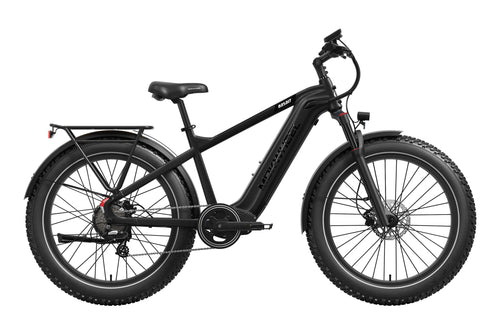
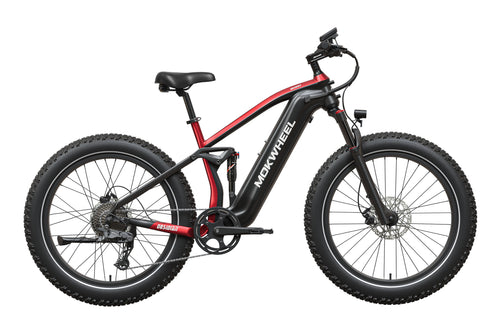
For riders who often leave smooth city roads behind, a more robust model can make sense. Forest paths, camping routes, gravel sections or more varied surfaces usually call for greater stability and control. In this case, Obsidian is a natural example. It suits riders who want confidence beyond asphalt and need a bike that feels secure on more demanding routes.
If daily life includes both urban routes and less predictable surfaces, a stable all-terrain option may offer the right balance. Obsidian ST 2.0 is designed for riders who want control, comfort and range without moving into a purely sporty off-road direction. It works especially well for those who do not separate everyday mobility and leisure riding too strictly.
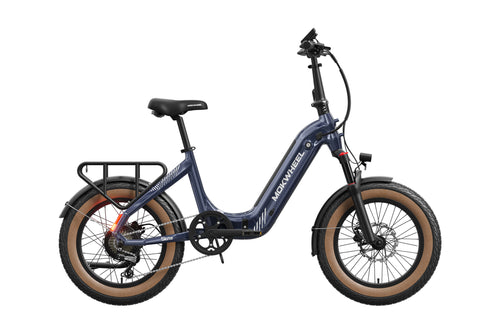
For riders with limited storage space or a need for more flexible transport, a compact solution can be more practical than a full-size model. Slate fits this need well. As a Folding electric bike, it is suitable for riders who need easier storage and a bike that can fit into different daily routines.
In the end, the best choice is not always the model that looks most impressive at first glance. It is the one that fits naturally into real life. Mokwheel’s E-Bike range is built around different types of riders and routes, from commuting and city mobility to longer weekend rides and outdoor use.
What World Bicycle Day Shows About Everyday Mobility
World Bicycle Day is not only about the bicycle as an environmentally friendly choice. It also shows how expectations around mobility are changing.
People are looking for solutions that are sustainable, but also comfortable, healthy and realistic enough for regular use. A mobility option only becomes powerful when it works in daily life, not just in theory.
The traditional bicycle still has an important place. The E-Bike expands that possibility for more people and more situations. It supports cycling rather than replacing it, making everyday riding more accessible when routes, time, energy or comfort would otherwise become barriers.
For many riders, Happy World Bicycle Day is no longer just a message shared once a year. It reflects a broader shift toward mobility that feels more relaxed, practical and sustainable in everyday life.
That is why World Bicycle Day 2026 feels especially relevant. Sustainable mobility becomes stronger when it fits into real routines. And for many riders, relaxed everyday mobility is exactly what makes cycling a lasting part of life.
Read More: Mother’s Day 2026: Practical Gift Ideas for Everyday Mobility


