



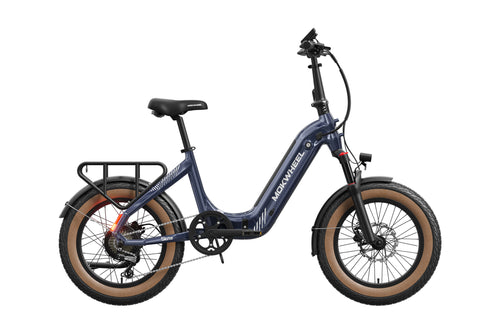


At first, the idea of riding an E-Bike without pedalling sounds simple. Less effort, easier starts and a more relaxed ride all seem appealing, especially for daily routes, hills or longer journeys. But in practice, most regular E-Bikes in Europe are not designed to work like small electric scooters.
The key difference lies in pedal assist. A standard E-Bike usually supports the rider while pedalling, rather than moving entirely on motor power. This is why the question is not just whether an E-Bike can move without pedalling, but what kind of E-Bike it is, how the motor works and which rules apply where it is used.

Can You Ride an E-Bike Without Pedalling
For most standard European E-Bikes, the answer is generally no. A regular Pedelec, also known as an EPAC, is designed to assist the rider while the pedals are turning. The motor adds support, but it does not replace pedalling completely.
Under the common European EPAC definition, the motor assistance is limited to a maximum continuous rated power of 0.25 kW and must reduce and stop when the bike reaches 25 km/h, or earlier if the cyclist stops pedalling. This same scope is also reflected in EN 15194 for EPAC bicycles.
This is why a standard E-Bike without pedalling does not usually behave like a throttle scooter. The rider remains part of the movement. The motor makes cycling easier, especially on hills, longer routes or when carrying extra weight, but the system is still built around pedalling.
If a bike can move independently without the rider pedalling, it may fall outside the standard Pedelec category. In that case, the rules can change, depending on speed, motor power, throttle function and local law.
Pedelec vs S-Pedelec: What Is the Difference
The main difference between a Pedelec and an S-Pedelec is how far the motor support goes. A standard Pedelec supports everyday cycling at lower assisted speeds. An S-Pedelec offers faster assistance and is often treated more like a moped in many European countries.
|
Type |
Motor Assistance |
Assisted Speed |
Licence / Insurance |
|
Pedelec / Standard EPAC |
Assistance while pedalling |
Up to 25 km/h |
Usually not required |
|
S-Pedelec |
Faster pedal assistance |
Up to 45 km/h |
Often required |
An S-Pedelec is different. Because it can assist at higher speeds, it may require insurance, registration, a licence, a suitable helmet or restricted road use depending on the country. EU vehicle rules provide a wider framework for vehicles that fall outside standard pedal-assist cycles, while everyday road-use rules may still be set locally.
This is why an E-Bike without pedals, or one that moves mainly by throttle, should not be confused with a normal Pedelec. It may look similar, but the legal category can be very different.

What Options Exist and Where Are the Limits
Even though a standard E-Bike is not meant to be ridden fully without pedalling, there are still several forms of support that make everyday use easier.
Most E-Bikes offer different assistance levels. A lower mode feels closer to traditional cycling, while a stronger mode reduces effort on hills, longer routes or when riding with bags. The rider still pedals, but the motor makes each pedal stroke feel lighter and more manageable.
Some models also include walk assist. This is not the same as riding without pedalling. Walk assist is usually meant for slow movement while pushing the bike, such as walking up a ramp, moving through a narrow space or handling a heavier bike near storage. For riders who live in apartments or need compact storage, this can also be relevant when using a Folding electric bike, where carrying, storing and moving the bike by hand are part of everyday practicality. Still, walk assist is not designed as a normal riding mode.
Throttle-based systems are more complicated in Europe. If the motor can drive the bike without pedalling, the vehicle may no longer fit standard EPAC use, depending on the exact setup. Rules can vary by country, especially when the vehicle exceeds standard pedal-assist limits.
This is also where many misunderstandings come from. When people ask whether E-Bikes without pedals are legal, the answer depends on what the vehicle actually is. A standard pedal-assist E-Bike, a throttle-controlled electric bike and a small electric moped are not always treated the same way.
Why Pedal Assist Is Often the Better Choice for Everyday Riding
An E-Bike that moves without effort may sound attractive, but for most daily riders, pedal assist offers a better balance. It reduces strain without removing the natural feeling of cycling.
The rider still stays active, while the motor helps with the harder parts of the ride. Hills feel less demanding, longer distances become more realistic and headwinds are easier to manage. This can make daily cycling feel more approachable without turning the bike into a fully motor-driven vehicle.
There is also a practical advantage. Standard Pedelecs are usually easier to fit into normal cycling routines. They are suitable for commuting, city rides, errands and weekend routes, while still keeping the familiar control and rhythm of a bicycle.
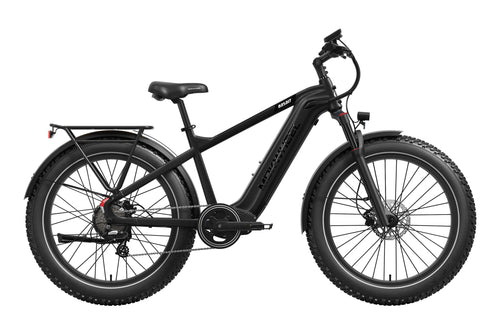
If the battery runs low or the assist is switched off, the bike can still be pedalled like a normal bicycle, although the extra weight may make it feel heavier. This is why many riders ask how hard it is to pedal an E-Bike without assist. The answer depends on the bike’s weight, gearing, tyres and terrain. A Fat Tyre E-bike, for example, may feel more stable and comfortable on mixed surfaces, but its wider tyres can also make unassisted riding feel heavier than a slimmer city model.

What Is the Better Choice for Everyday Riding
For daily use, the better choice is usually not a bike that removes pedalling completely. It is an E-Bike that makes regular riding easier, more comfortable and more repeatable.
A standard Pedelec is often the most practical solution. It supports movement without taking over the ride. It can help commuters arrive with less effort, make shopping trips easier and encourage more relaxed rides during weekends or holidays.
A model such as the Mokwheel Basalt 2.0 Ebike fits this kind of everyday logic well. It is not about replacing cycling with motor power, but about making daily rides more stable, comfortable and manageable. For most riders, this balance between support and active pedalling is what makes a standard E-Bike more useful than a fully motor-driven setup.
In the end, the most practical option depends on the rider’s routine. For city commuting, easy handling and steady assistance matter most. For mixed routes, comfort and control become more important. For limited storage or apartment living, compact design may also play a role. What matters is not removing pedalling completely, but making regular riding easier to enjoy.
FAQ
Q1: Can an E-Bike move without pedalling?
A standard Pedelec or EPAC usually does not move as a normal riding mode without pedalling. The motor assists while the rider pedals and stops assisting when pedalling stops or when the assisted speed limit is reached.
Q2: Do E-Bikes work without pedalling?
Some electric vehicles or throttle-based models may move without pedalling, but they may not be treated as standard E-Bikes under European rules. The legal category depends on motor power, assisted speed, throttle function and local regulations.
Q3: What is an E-Bike without pedals?
An electric vehicle without pedals is usually not a standard Pedelec. It may be treated more like a scooter, moped or another regulated vehicle depending on its speed, power and design.
Q4: What is the difference between a Pedelec and an S-Pedelec?
A Pedelec supports pedalling up to 25 km/h. An S-Pedelec can assist at higher speeds, often up to 45 km/h, and may require insurance, registration, a licence or specific helmet use depending on local rules.
Q5: Will E-Bikes go without pedalling if the assist is turned off?
If the assist is turned off, a standard E-Bike can still be pedalled like a normal bicycle. However, it may feel heavier because of the motor, battery and frame design.
Q6:Which option makes most sense for everyday use?
For most riders, a standard Pedelec is the most practical option. It reduces effort, keeps the riding experience natural and is easier to use within ordinary cycling routines.
Conclusion: Why Pedal Assist Is Usually the More Practical Choice
Riding an E-Bike without pedalling is often misunderstood. In Europe, most regular E-Bikes are built around pedal assist, not fully motor-driven riding. The rider pedals, and the motor makes the journey easier.
For everyday use, this setup is usually the more practical choice. It supports commuting, city rides, shopping trips and leisure routes while keeping the experience close to normal cycling. It also avoids many of the complications that can come with throttle-based vehicles, S-Pedelecs or higher-powered models.
Before choosing a bike or using it on public roads, it is worth understanding the difference between pedal assist, walk assist and motor-driven movement. In most cases, a standard Pedelec remains the simpler, more flexible and more natural way to enjoy E-Bikes in daily life.
Read More: E-Bike Laws in Europe 2026: Rules, Safety Standards and What Riders Need to Know


